
Still an Athlete? | Week 2: Betty White, $261 in sports bras, and what we should have learned in health class.

Updated: 6 days ago

Featuring Betty White, $261 in sports bras, and some things I really wish we'd learned in health class.
Everything in this post was purchased with my own money. Some links are affiliate links, which means I may earn a small commission if you purchase through them.
$261.31 Later…
On Tuesday, I decided to incorporate some sprint training into my 5.5-mile walk.
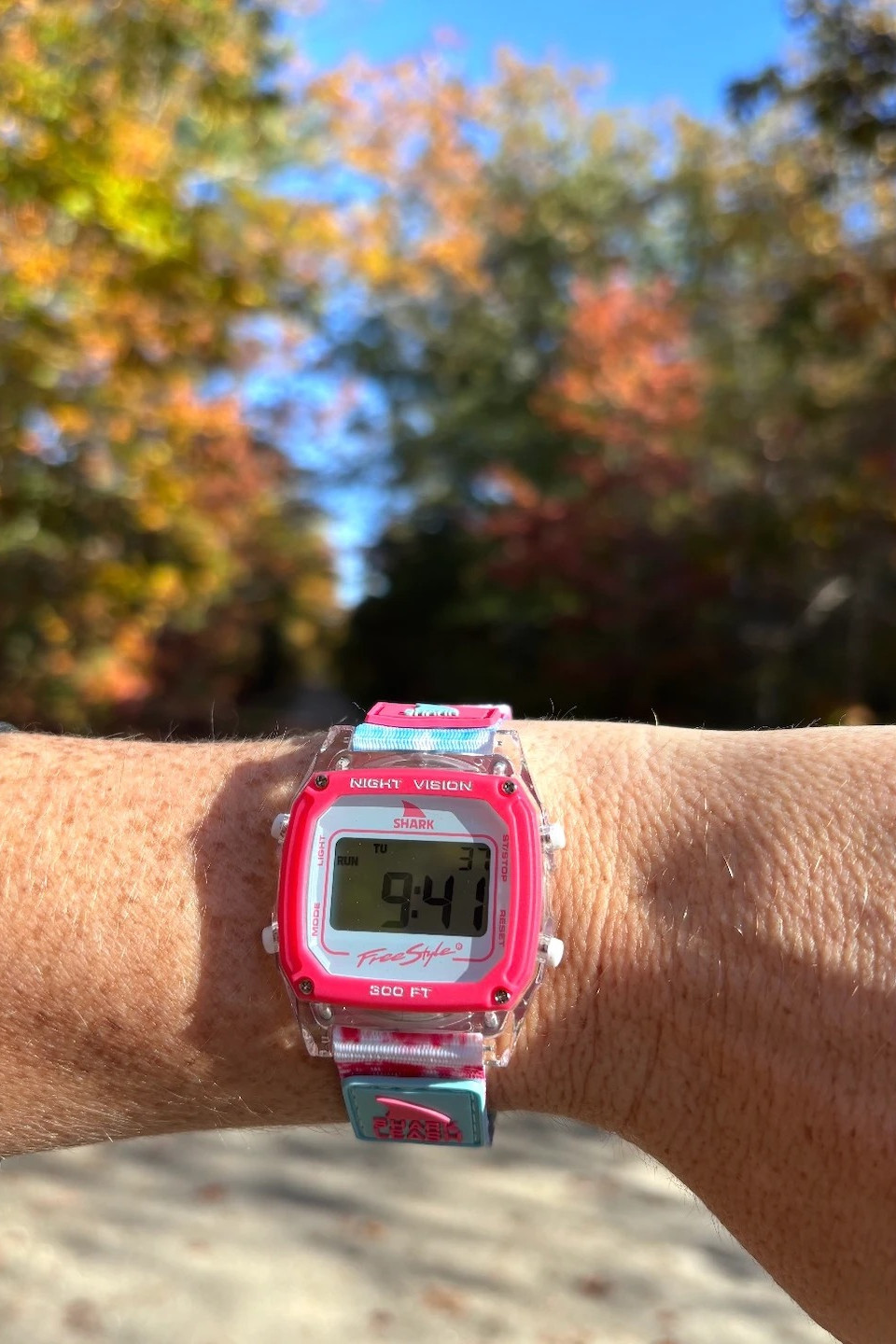
Five 30-second sprints with 90 seconds of recovery.
Nothing crazy. Just a former Division I athlete casually reminding herself that she still has a little speed left.
Armed with my new red, white, and blue Freestyle Shark watch, I was ready to go.
Anyway, back to the sprints.
The legs? Questionable. The lungs? We survived. The sports bra? Absolutely not.
My old Nike sports bra had quietly retired from competitive athletics without informing me. So naturally, I did what any reasonable woman trying to get back into shape would do.
I went home and spent $261.31 on four sports bras.
Four. A perfectly reasonable financial decision after approximately two and a half minutes of sprinting.
I'll be testing them over the next several weeks and sharing which ones actually hold up during sprinting, tennis, lifting, and real life.
You're welcome, science.

Apparently, Betty White Was Right
Remember that Snickers commercial with Betty White?
"You're not you when you're hungry."
Well, Betty White was onto something.
I've spent a good portion of my adult life thinking that getting in better shape meant eating less and working out more.
Restrict calories. Exercise harder. Repeat.
I've tried intermittent fasting. I've skipped breakfast. I've done the whole thing.
And now I'm reading ROAR by Dr. Stacy Sims and wondering what the hell I've been doing all these years.

One of my biggest takeaways from the first two chapters is the importance of actually fueling your body, especially when you're asking it to perform.
Groundbreaking concept, I know.
I've started making a conscious effort to eat earlier in the morning, ideally within about 30 minutes of waking up, rather than waiting hours to have something.
I'm also drinking a protein coffee in the morning.
And so far? I feel really good.
I'm fuller longer, and I genuinely look forward to having something substantial early in the day.
Also, WHAT WAS I DOING NOT DRINKING COFFEE FOR SO LONG?
Two shots of espresso, almond milk, protein powder, and suddenly I'm a new person.
And to the friends who've reached out with protein recommendations, workout ideas, and invitations to train together: I love that.
Hearing from other women trying to get stronger has been one of the best parts of this series.
But the more I read ROAR, the more I started thinking about my experience as a young female athlete.
And honestly, some of it makes me sad.
Why Didn't We Learn This in Health Class?

One of the things that stopped me in my tracks was Dr. Sims' discussion of the menstrual cycle and athletic performance.
She challenges the assumption that getting your period automatically means you're going to perform poorly.
And I immediately thought about college lacrosse.
I remember how much we worried about getting our periods on game day.
Sometimes we'd adjust our birth control schedules to skip them because dealing with a period during a game felt like one more thing we didn't need.
And now, almost 20 years later, I'm reading about how hormones change throughout the menstrual cycle and how those changes may affect the way we feel and train.
Why weren't we taught more about this?
Why wasn't this part of health class?
Why wasn't it part of our education as female athletes?
I played four years of Division I lacrosse. I went on to coach college lacrosse. I've spent most of my life surrounded by female athletes.
And I didn't really start understanding my own menstrual cycle until I was trying to get pregnant.
That's kind of wild to me.
I can't help but wonder whether I would've been a better competitor if I'd understood more about my body.
Would I have fueled differently? Paid more attention to recovery? Better understood why I sometimes felt exhausted?
I don't know.
I'm learning that every woman's experience is different, and there's no one-size-fits-all answer when it comes to our cycles and performance.
But shouldn't understanding our own bodies be part of becoming better athletes?
And it got me thinking about some of the other messages I received as a young athlete.
Strong Legs Were Uncool (Or So We Thought)

When I was a freshman at Fairfield, we were paired with the upperclassmen for lifts.
I remember some of the older girls skipping leg exercises because they didn't want their quads to get too big.
And what did I do?
I skipped them, too.
I was a Division I lacrosse player actively avoiding strengthening the muscles responsible for running, dodging, defending, and pretty much everything else I needed to do on a lacrosse field.
Make it make sense.
But I was 18. I wanted to fit in.
Here's the part that really bothers me looking back.
When I became an upperclassman, I did the exact same thing.
I skipped legs.
And now there were freshmen lifting alongside me, just like I'd once lifted alongside the older girls.
I don't know whether anyone followed my example, but I certainly wasn't showing them anything different.
There were other things, too.
My freshman year, our body weights were posted on the strength room door. For everyone to see. Not just our team.
I remember how horrifying that felt.
Before I go any further, I want to be clear: I'm not referring to Fairfield's current coaching staff or strength coaches. The staff changed after my freshman year, and I had the BEST coaches ever my junior and senior years. GO STAGS.
That same season, I also remember scouting reports that included descriptions of opposing players' physical appearances.
And even then, I remember wondering why that was relevant.
Were we scouting how someone played lacrosse, or were we evaluating the size of her quads?
Reflecting on those experiences now, especially as a mother and a coach, is upsetting.
Because these weren't just conversations about training. They were messages about what female athletes' bodies were supposed to look like.
And those messages stuck.
And here's the crazy part. This was before Instagram. Before TikTok.
Before girls could spend hours scrolling through perfectly curated bodies, workouts, and diets.
We had plenty of body-image pressures without any of that.
I genuinely cannot imagine what young girls are navigating today.
But that's another rant for another day.
What I keep coming back to is this:
Young female athletes are always learning from what the older athletes and coaches around them do, not just what they say.
And I know that because I was once the freshman watching.
Eventually, I became the upperclassman being watched.
That's something I think about a lot now as a coach.
Dads, You're Part of This Conversation Too

This is where the whole thing becomes about more than my little 12-week experiment.
I have two daughters (and now a baby boy).
I coach high school girls. I work with young female athletes. I spend a lot of time thinking about how we develop confident, capable young women.
And I want them to grow up understanding their bodies.
Not being embarrassed by them.
Not thinking their periods are something to hide or apologize for.
Not believing that eating less is automatically the answer to becoming a better athlete.
I want my daughters to understand that their bodies will change, that those changes are normal, and that being strong and healthy has absolutely nothing to do with looking a certain way.
And dads, I'm talking to you, too.
If you're raising daughters, coaching girls, or living in a house full of women, take the time to understand this stuff.
Talk about periods. Learn about menstrual cycles. Ask questions.
Be someone your daughter can talk to without feeling embarrassed.
Why do we make periods so taboo?
Why are girls made to feel ashamed of something that's a normal part of their development?
I want my daughters to grow up knowing they can talk openly about their bodies with both of their parents. And my son? He's going to understand all of this too. And talk about it.
And I want the girls I coach to understand that becoming stronger and healthier isn't about getting smaller.
I'm only two chapters into ROAR, so I certainly don't have all the answers.
But I'm learning.
And I hope that by the time my daughters are old enough to ask these questions, I'll have better answers than I did at their age.
I can't go back and change what I believed at 18. But I can change what I teach at 38.
So, Did I Actually Work Out This Week?
Well, sort of.
Tuesday was my 5.5-mile walk and sprint workout. Wednesday was tennis, and Thursday was a travel day.
Friday and Saturday didn't include structured workouts, but I walked about five miles each day.
Saturday also included beach sprints against my 5-year-old. (She's fast.)
Sunday? Another five or six miles of walking.

So while I didn't get every workout in that I'd planned, I certainly wasn't sitting around.
I'm learning that training with three kids, travel, and a business doesn't always look like the schedule I followed as a college athlete.
This week was about learning to fuel myself better, understanding my body, and reconsidering some beliefs I've carried around for 20 years.
Not bad for Week 2.
Although I am now $261.31 poorer.
Still an athlete? Working on it.
See you next Monday.

xo Erin
All products mentioned were purchased with my own money. No gifted products or paid sponsorships. Some product links are affiliate links.
As an Amazon Associate I earn from qualifying purchases.


Comments